




Trash and recycling management in apartment communities isn’t rocket science but it sure feels like it sometimes. If your trash areas look like a disaster zone and recycling is a joke, you’re losing money and resident goodwill. Fix this with a no-nonsense operational playbook focused on resident education, communication, and on-site team training. Here’s the straight talk on how to get it right.
First, know your residents.
Understand their habits, schedules, and expectations around trash. Surveys or quick check-ins reveal what confuses them and what motivates them. Spoiler: Most don’t hate recycling; they just don’t know how to do it properly or why it matters. Start there.
Next, set crystal-clear trash and recycling rules.
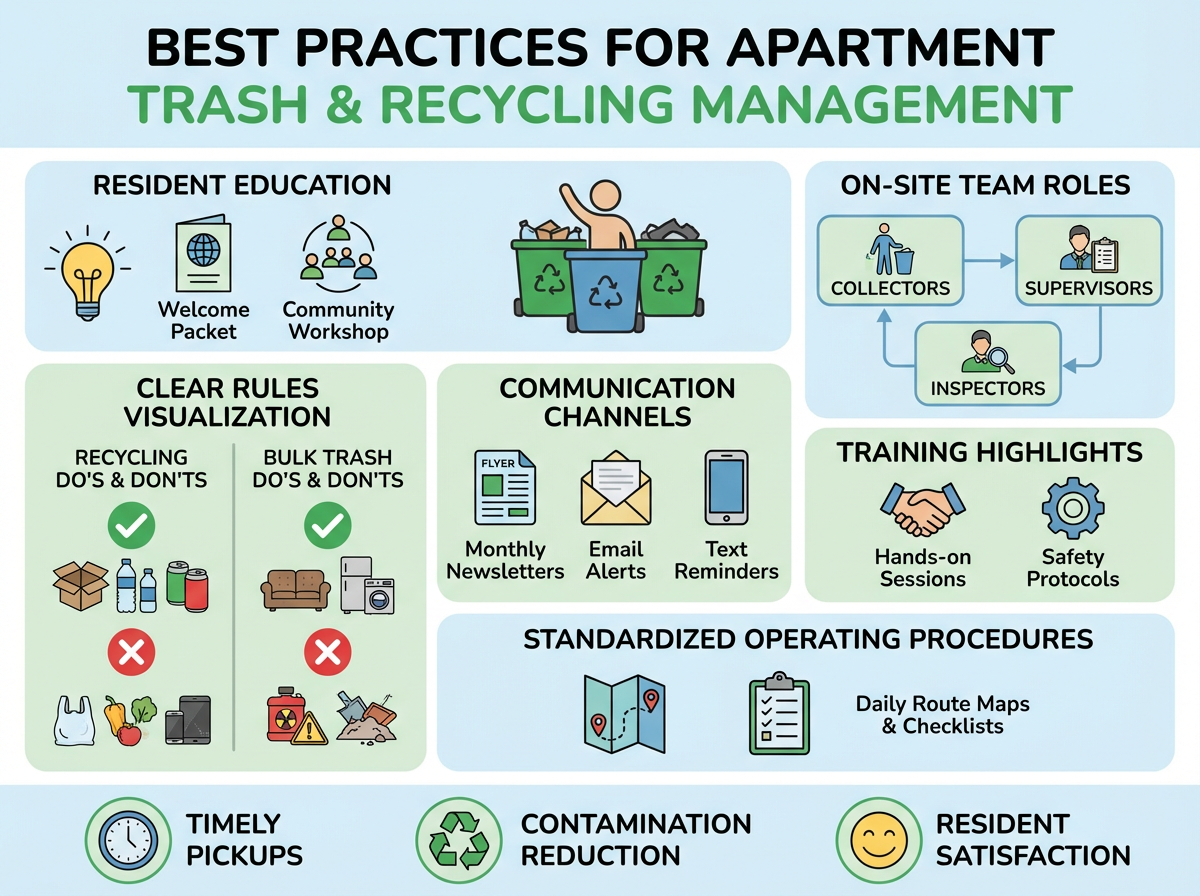
Don’t slap rules in fine print nobody reads. Make move-in education part of onboarding. Hand residents simple instructions—graphics work wonders—explaining pick-up days, what can’t go in recycling bins, how to handle bulk waste, and penalties for violations. Lock this info down in welcome packets, emails, and tenant portals.
Communication can’t be a one-shot deal.
Establish a steady cadence. Weekly or biweekly reminders before pick-ups keep everyone on track. Use different channels—flyers in elevators, building bulletin boards, emails, texts, and community apps. Templates help — keep messages punchy and specific: “Set your bags by 7 am Thurs,” “No plastic bags in recycling,” etc. Automate where possible but don’t sound like a robot.
Managing your on-site trash team is critical.
Whether you run valet trash or scheduled pickups, define clear roles—collectors, supervisors, inspectors. Staff adequately; cutting corners here is a false economy. Accountability matters; track missed pickups, overflow incidents, and contamination rates. Hold daily briefings to review issues and plan the next day.
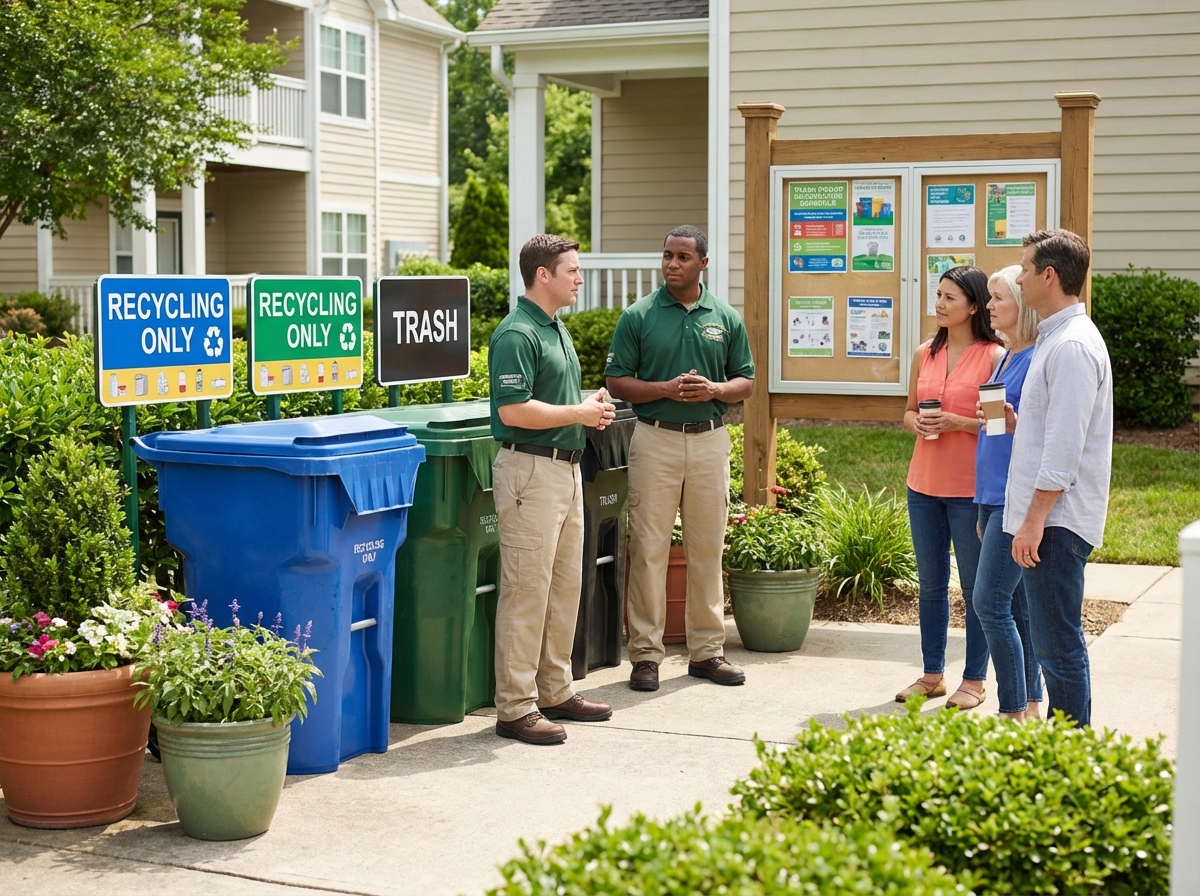
Training for your team must focus on the problem areas: recognizing proper recyclables, bulk item handling, sorting, and identifying violations.
Hands-on sessions, short huddles, and spot-checks beat endless PowerPoints. Train your team to escalate problems immediately—overflowing bins, illegal dumping—to management for fast resolution.
Standard operating procedures (SOPs) create consistency.
Map routes logically, assign zones, and optimize timing to avoid late or missed pickups. Establish step-by-step processes for bulky item removals, including advance scheduling and resident notifications. Inspection checklists and reporting KPIs like pickup compliance, contamination rates, and complaint numbers keep performance transparent and ready for tweaks.
Better trash and recycling management improves resident experience beyond just cleaner property.
Properly managed trash areas reduce odor, pests, and eyesores that drive complaints. Clear, respectful communication boosts resident satisfaction and compliance. A well-trained team works smarter, reducing overtime and emergencies.
Take valet trash service: if your team knows exactly who picks up when, follows a script explaining rules, and reports overflow on the spot, you cut down missed collections and contamination.
Residents get consistent service, less hassle. Scheduled pickups improve with clear reminders and easy bulk-item processes. Recycling coordination benefits from onsite bins properly labeled and maintained, with rules enforced, not ignored.
Time to stop guessing and start controlling.
Trash and recycling management in apartment communities means operational discipline—education, communication, training, and workflow tuned tight. Want to see how it looks in action? Get a free personalized quote at https://americantrashservice.com/free-quote and see how streamlined operations boost your community’s appeal and bottom line.