




Efficient apartment waste operations don’t happen by accident. You want cleaner properties, fewer missed pickups, less overflow, and properly sorted recycling. Here’s the no-fluff playbook for property managers who want to get this right, fast.
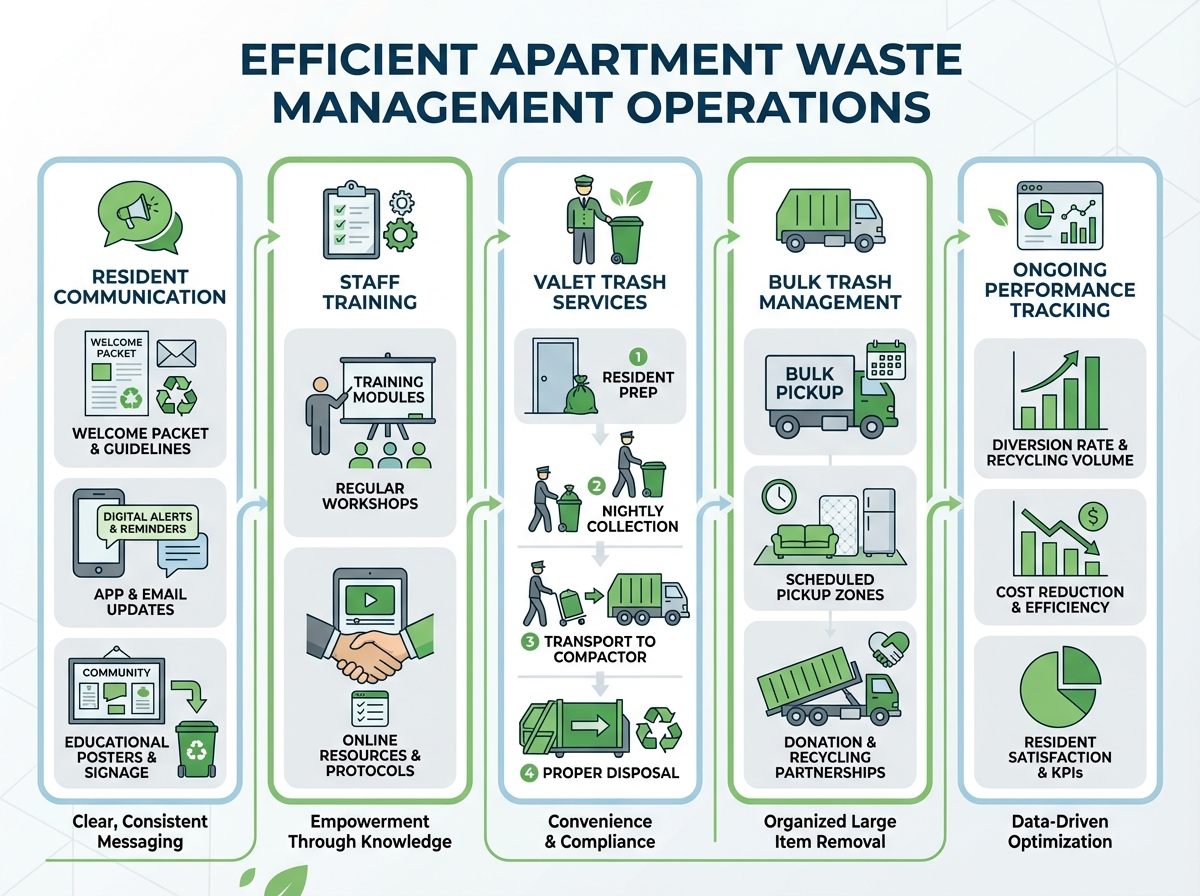
First, stop guessing what residents know about trash. They usually don’t. Start with clear, simple communication. Send a welcome email or flyer outlining trash and recycling rules. Keep it basic: days and times for pickup, what goes where, how to handle bulk items. Use visuals. No one’s reading walls of text. Include a checklist like: bag trash securely, flatten boxes, rinse containers, no hazardous waste. For example, in one complex, sending a single-page illustrated guide cut contamination by 30%. That’s a quick win.
Now, let’s talk about training your on-site team. This isn’t just a cleanup crew; they’re your frontline educators. Host a training session covering waste separation, recycling contamination signs, bulk item protocols, and overflow management. Role-play scenarios: what to do when bins are full before pickup? How to politely remind residents about recycling rules? Train them on documenting missed pickups and overflow incidents for faster resolution. In practice, a Dallas property manager found that tracking overflow with a simple spreadsheet helped reduce complaints by half within a month.
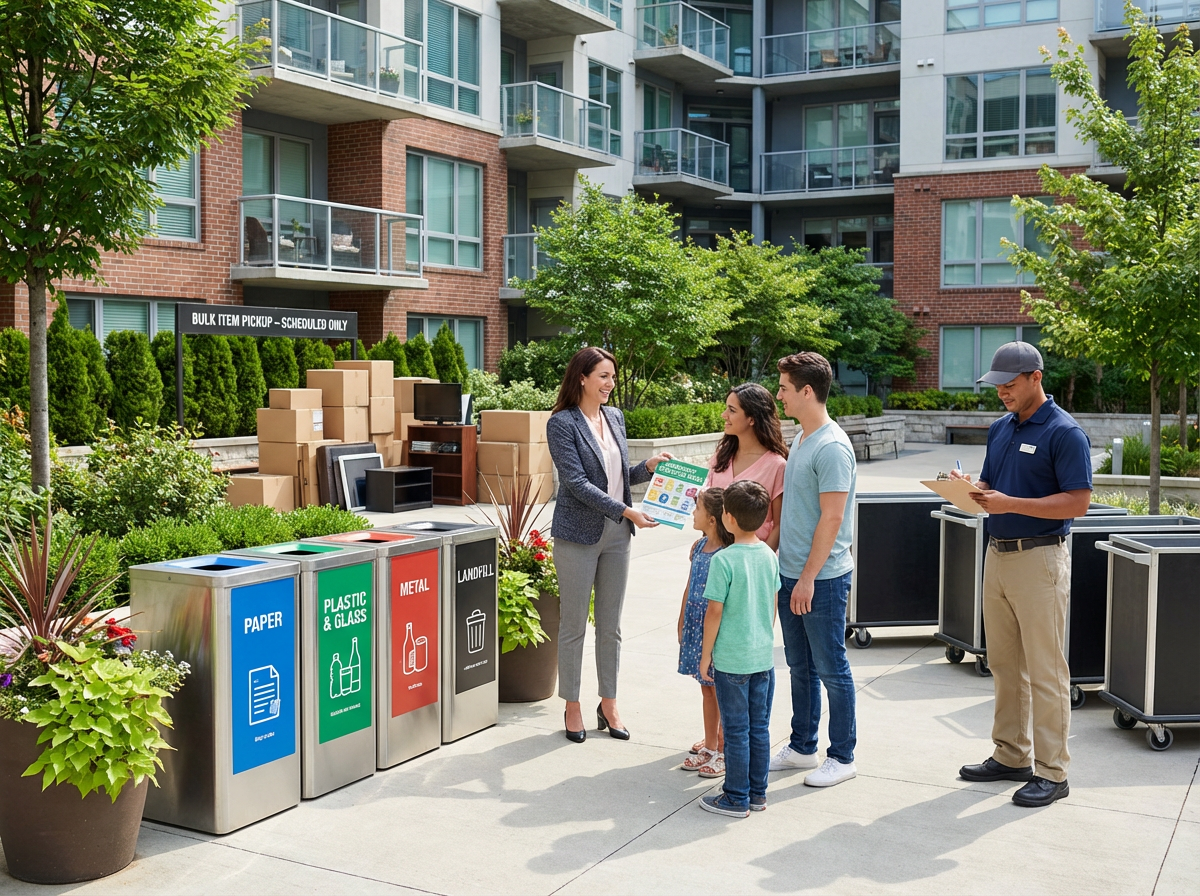
Valet trash services are a game changer but only if teams follow standards. Create a step-by-step workflow: collect from doorsteps by set times, immediately secure waste to avoid spills, replace liners, report issues to management. A quick checklist for daily shifts helps prevent shortcuts and keeps everyone accountable.
Don’t forget bulk trash — it’s the wild card. Tell residents upfront how and when to dispose of big stuff. Schedule quarterly bulk pickups or designate a drop-off spot. Train staff to identify prohibited items and escalate them before they turn into eyesores. One community got bulk item problems below 5% after instituting a bulk tagging system and resident reminder texts.
Communication is ongoing, not a one-off. Monthly newsletters, digital bulletin boards, and quick text reminders keep expectations fresh. Use templates with direct language and clear action steps, like “Put trash out after 6pm on Tuesday, no exceptions.” Vague doesn’t work in waste ops.
KPIs matter here—track contamination rates, missed pickups, complaints, and overflow incidents monthly. Use these numbers to tweak training and resident messaging. If contamination spikes, your message or staff training needs a rework.
Roll it out in phases: start with resident communication, then train staff, set up valet procedures, and finally tackle bulk trash processes. Measure everything along the way. Keep it simple, repeat often.
This system isn’t fancy, but damn it’s effective. Properties that own waste ops with communication and training save time, money, and headaches. Give your residents the info and reminders they need. Equip your team with clear, practical skills and workflows. Track outcomes relentlessly.
If you want to dive deeper, check out the best step-by-step training in English for building AI Agents from scratch. It’s surprisingly relevant here—any tool helping automate reminders or track incidents can boost your waste operation game. No fluff, just practical stuff to make your life easier. For tailored support, you can also get a free quote on improving your apartment waste operations.