





Valet trash and waste management in apartment communities isn’t rocket science—but screw it up, and residents notice fast. Missed pickups, overflowing cans, contamination, and no-shows turn complaints into a nightmare. If you’re managing property or running multifamily ops, you want a system that’s tight, clear, and somehow idiot-proof. Let’s cut the fluff and get straight to what works.
First things first—resident communication.
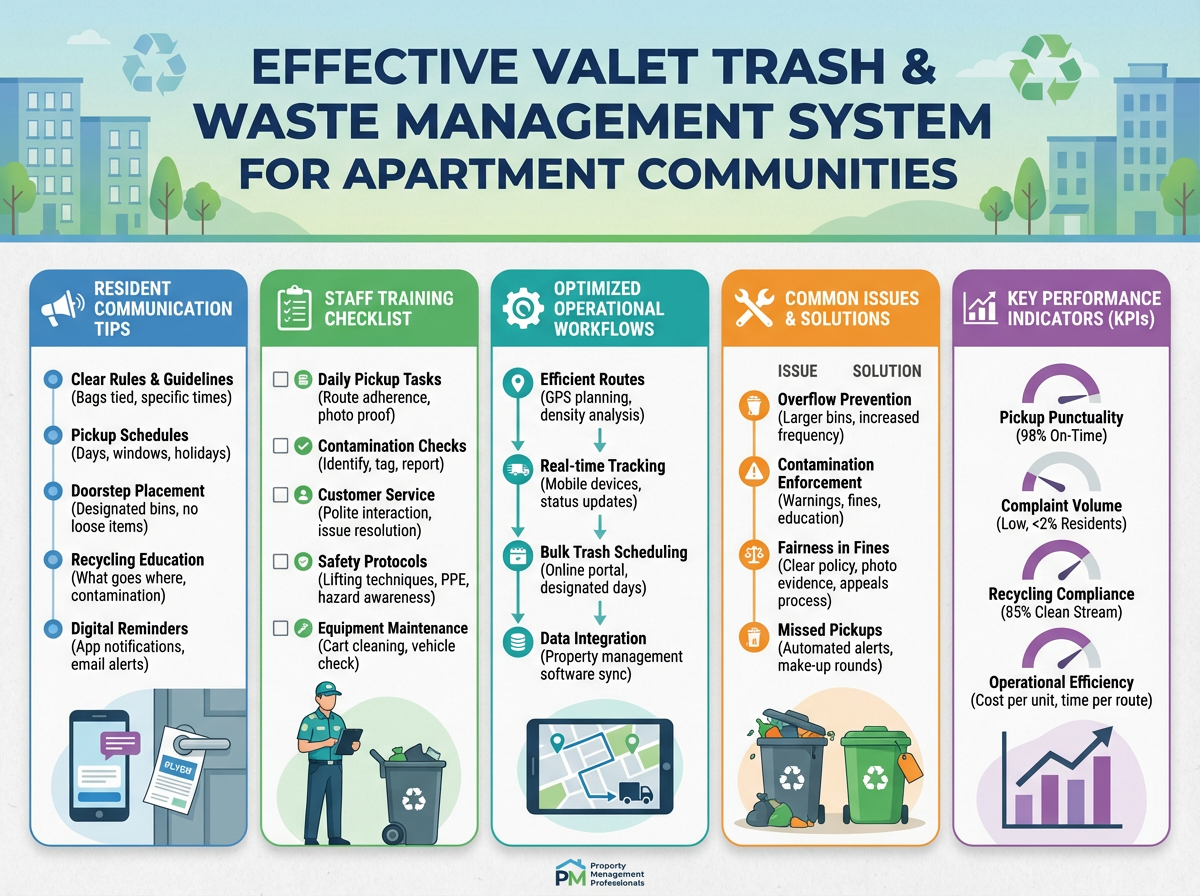
Assume your tenants don’t read walls of text. Keep trash policies sharp and simple. Use bullet points in emails, flyers, community app posts, whatever you got. Spell out exactly what goes where, pickup schedules, bulk waste rules. No jargon, no guessing games. For example: “Valet trash pickup happens every weeknight by 8 PM. Place bags outside your door no later than 7 PM. Bulk items? Call front desk 24 hours in advance.” Repeat this message often, mix channels; residents forget or ignore stuff fast.
Now, training your on-site staff.
Throwing keys and schedules at them isn’t enough. Build a checklist covering daily tasks: route start/end times, trash bin inspections, contamination checks, and reporting missed pickups immediately. Role-play common resident questions and tricky waste types—they’ll thank you with less confusion. Emphasize safety and customer service equally—it’s their job to keep waste areas compliant and residents happy, no exceptions.
Operational workflows need a serious tune-up.
Start with a clear valet trash route that minimizes backtracking. Use handheld devices or apps for real-time tracking to spot missed pickups before residents complain. Schedule bulk item pickups separately and confirm requests via email or texts the day before. For recycling, partner with your local hauler to clarify accepted materials. Confusion here kills your diversion rate and brings fines. Assign dedicated trash area cleanings after peak pickup times to avoid overflow chaos.
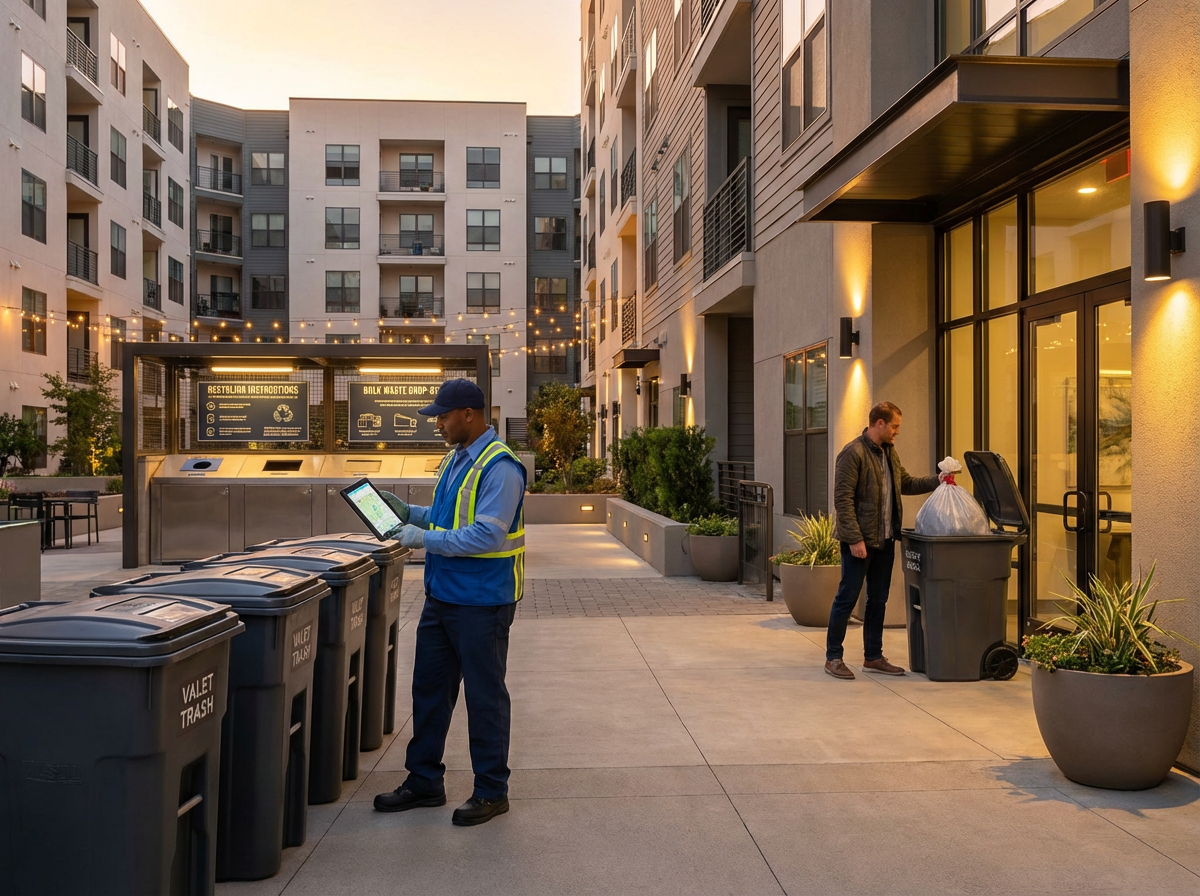
Common issues like overflow or contamination come down to enforcement and education.
Residents dumping hazardous waste or mixing recyclables require quick intervention—not lectures. Set up regular, visible reminders and enforce fines if necessary, but be fair and consistent. Transparency here builds trust; no one likes unpredictable rules.
Measure success with KPIs that matter:
pickup punctuality, resident complaint volume, contamination rates, and recycling compliance. Review these weekly with your team. Use data to tweak staffing, routes, or communication tactics on the fly.
Templates?
Here’s a quick starter for resident communication: “Hi [Name], just a reminder that valet trash pickup is tonight by 8 PM. Please place your bags outside your door by 7 PM. For bulk items, schedule 24 hours ahead with the front desk. Thanks for helping us keep the community clean!” Schedule this as a weekly blast at least.
Finally, if you don’t have a professional valet trash partner, you’re doing it harder than you need to.
American Trash Service brings years of on-site expertise, tailored solutions, and reliable operations that free up your team to focus on residents, not trash drama. They handle everything smoothly from pickups to compliance.
If you want your community trash game to stop being a headache, check out American Trash Service for a no-strings free quote at https://americantrashservice.com/free-quote. It’s a smart move toward hassle-free waste management.
Look, if you want to keep residents happy and operations tight, it’s about clear rules, sharp training, and efficient workflows—not hope and luck. Nail those, you’re golden.