





Waste management in apartment communities isn’t just about dumping trash in a bin and calling it a day. If you’re managing a property or running a multifamily operation, you already know the chaos behind missed pickups, recycling mess, and tenant complaints. Fixing this starts with clear communication and a solid on-site game plan.
First off, set firm waste policies from day one. Spell out what tenants can toss, where, and when. Don’t assume they know—lay it down in lease agreements, welcome packets, and visible signage. Clarity kills confusion. Next, create straightforward resident instructions. Use bullet points, simple language, and visuals if you can. Nobody wants to decode jargon after a long day.
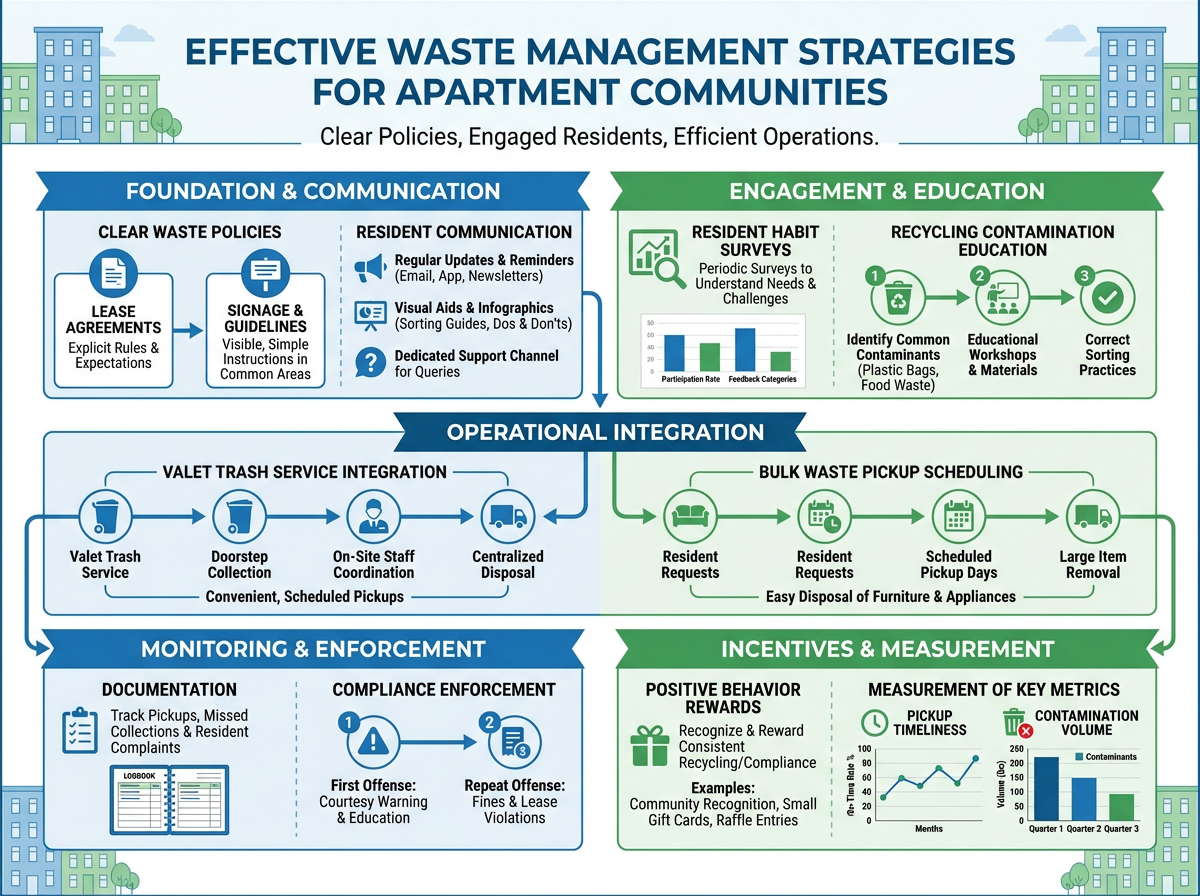
Understand your residents’ habits and expectations. Are they more likely to generate bulk waste monthly? Do they expect a valet trash service? Get feedback through quick surveys or occasional chats. This intel lets you tailor services, whether it’s ramping up recycling bins or scheduling bulk pickups.
Speaking of valet trash service, integrating a professional team changes the game. On-site staff must sync perfectly with valet crews. Train your personnel on protocols: how to document missed pickups immediately, handle overflow without fuss, and escalate issues fast. Got a tenant leaving a trashed hallway? Your team needs to jump on that before it becomes a health hazard or a fire risk.
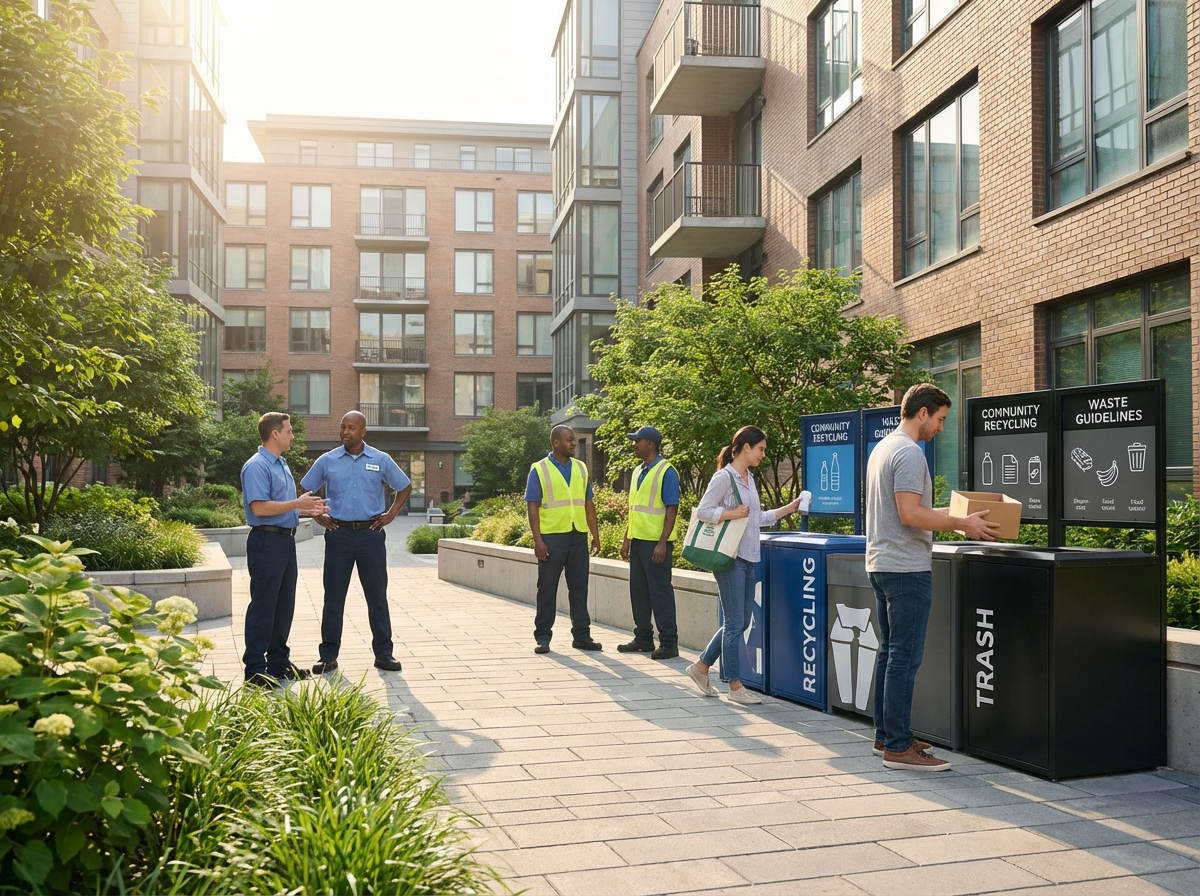
Bulk items deserve special attention. Set up a simple but strict process: schedule pickup days, inform tenants about where and when to leave items, and enforce cleanup. Don’t allow random dumping—it messes up the whole operation. Same with recycling. Educate residents about contamination—no plastic bags in recycling bins, no food leftovers, none of that. Contaminated recycling increases costs and defeats goals.
Documentation is your best friend here. Maintain logs for pickups, complaints, missed service spots, and staff interventions. Use these to spot recurring problems or bottlenecks. If one building always has overflow issues, maybe you need extra service days or bigger bins there. Escalate persistent problems up the chain and expect accountability.
Compliance enforcement can get sticky, but don’t be soft. Repeat offenders should get warnings, then fines if needed. It’s a waste of time and respect to let some tenants drag down the community’s cleanliness. Also, reward good behavior occasionally—recognition helps keep the vibe positive.
Lastly, measure your success. Use key metrics: pickup timeliness, resident satisfaction scores, volume of contamination, and bulk item handling efficiency. Review monthly or quarterly. Adjust your approach based on hard data, not guesswork.
It’s a constant feedback loop between your team, tenants, and the waste service. American Trash Service is built to support this exact model—helping properties streamline communication, boost on-site coordination, and get trash taken care of without headaches. Want to see how they can fit your community? Request a free quote today and start cleaning up your waste management mess with real professionals.
If you want a no-fluff, step-by-step training on building AI agents that automate customer support or operational workflows like these, check out the latest localized guides. They’ll save you time and get you smarter fast—something every property manager should care about.