




Efficient apartment waste operations don’t just happen. They’re built on clear communication, solid policies, and staff who actually know what they’re doing. If your multifamily community struggles with overflow trash, missed pickups, or recycling contamination, it’s not a mystery — it’s a process problem. Fix that first.
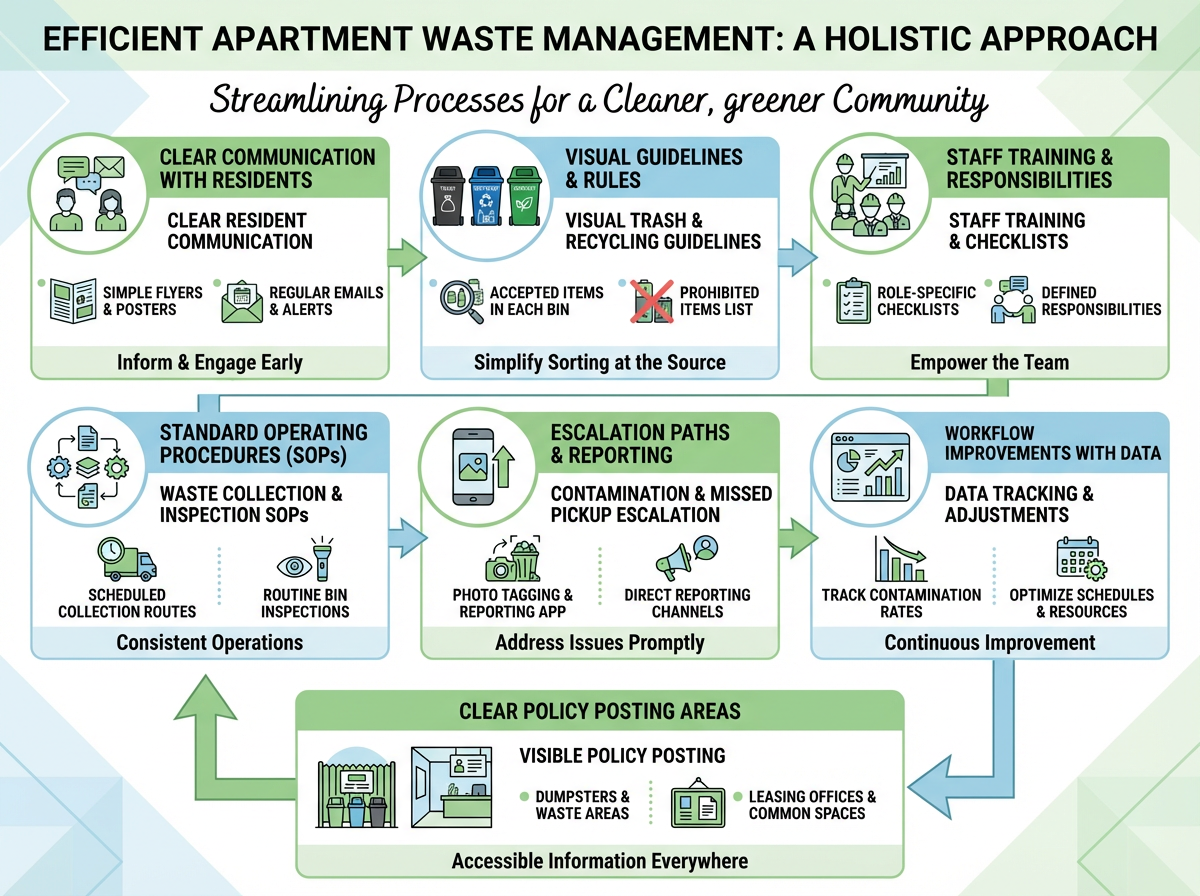
Start by understanding your residents. They want clean, odor-free spaces and easy-to-follow recycling rules. Don’t assume everyone knows how to sort their waste or when collection happens. Send out a simple, no-fluff flyer or email that explains the trash schedule, recycling do’s and don’ts, and bulk pickup procedures. Use visuals — people skim, they don’t read essays.
Make your policies crystal clear. Define where and when trash goes out, what can be recycled, and the fees or penalties for violations. For example, forbid dumping bulk trash in regular dumpsters and explain how to schedule a bulk pickup. Post these policies near dumpsters, in the leasing office, and on your community app if you have one. No jargon, no ambiguity.
Your on-site staff is your frontline. Train them thoroughly. That means starting with a checklist for valet trash pick-up: check bags for leaks, replace liners, clean around bins. Coordinate recycling days so staff reminds residents and double-check contamination issues. Assign a clear point person for bulk pickups. Train everyone on escalation paths for common issues — missed pickups, resident complaints, contaminated bins. Who calls the hauler? Who informs the leasing office? Update this regularly.
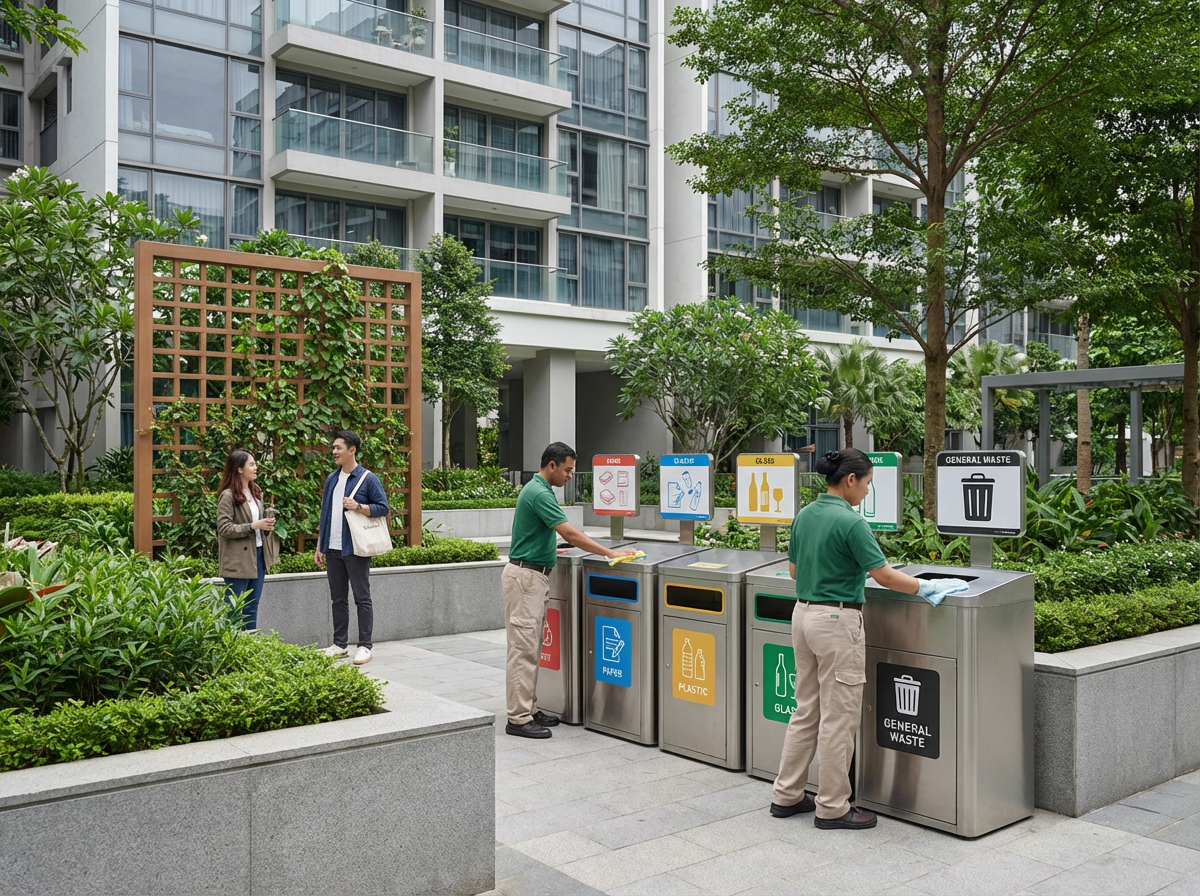
Create standard operating procedures (SOPs) that cover every step of waste management. Draft shift handoff notes so the day team knows what the night team did and vice versa. Include quality assurance checklists for supervisors to audit cleanliness and collection accuracy. For instance, a daily bin inspection checklist can catch overflowing dumpsters before things spiral.
Implement escalation paths to handle problems fast. If staff encounters contamination, they should tag the bin, snap a quick pic, and notify the property manager. Same with missed pickups. Don’t let these issues linger — set strict resolution timelines.
Workflow improvements come down to data and action. Track pickups, complaints, and contamination reports. If overflow happens on Tuesday mornings, maybe shift pickup earlier or add an extra sweep that day. If residents don’t know what’s recyclable, schedule short, engaging info sessions or quick videos. Be relentlessly practical and adjust quickly.
Here’s a quick resident communication template snippet for your next newsletter: “Trash Pickup: Monday, Wednesday, Friday by 7 AM. Please place trash in secured bags in dumpsters by 6:30 AM. Recycling Bins: Only paper, plastics #1 and #2, and cans allowed. No plastic bags, no food waste. Need to dispose of furniture or appliances? Schedule a bulk pickup by calling the office or filling out the form on our website.”
For staff training, a checklist example: Start shift, inspect dumpsters for damage, pick up valet trash bags, replace liners, note any issues and report, remind residents (via posted signs) to follow recycling rules, schedule bulk pickups, end shift with a brief report and handoff notes. Simple, clear, repeatable.
Waste operations are often overlooked, but they’re a linchpin of resident satisfaction and property upkeep. Nail these basics, and your community will run smoother, residents will stop complaining, and you’ll avoid costly cleanups.
Want a ready-to-go package with these templates, checklists, and training guides customized for your community? Request a free quote now, and see how efficient apartment waste operations become surprisingly easy when you have the right system.