





Valet trash and waste management operational playbook is the foundation every multifamily property manager should nail down. If you want to cut complaints, boost resident satisfaction, and build a seamless trash service, this is where you start—no fluff, no vague theory. Let’s get real about how to run this right, step by step.
First, resident communication can make or break your valet trash program.
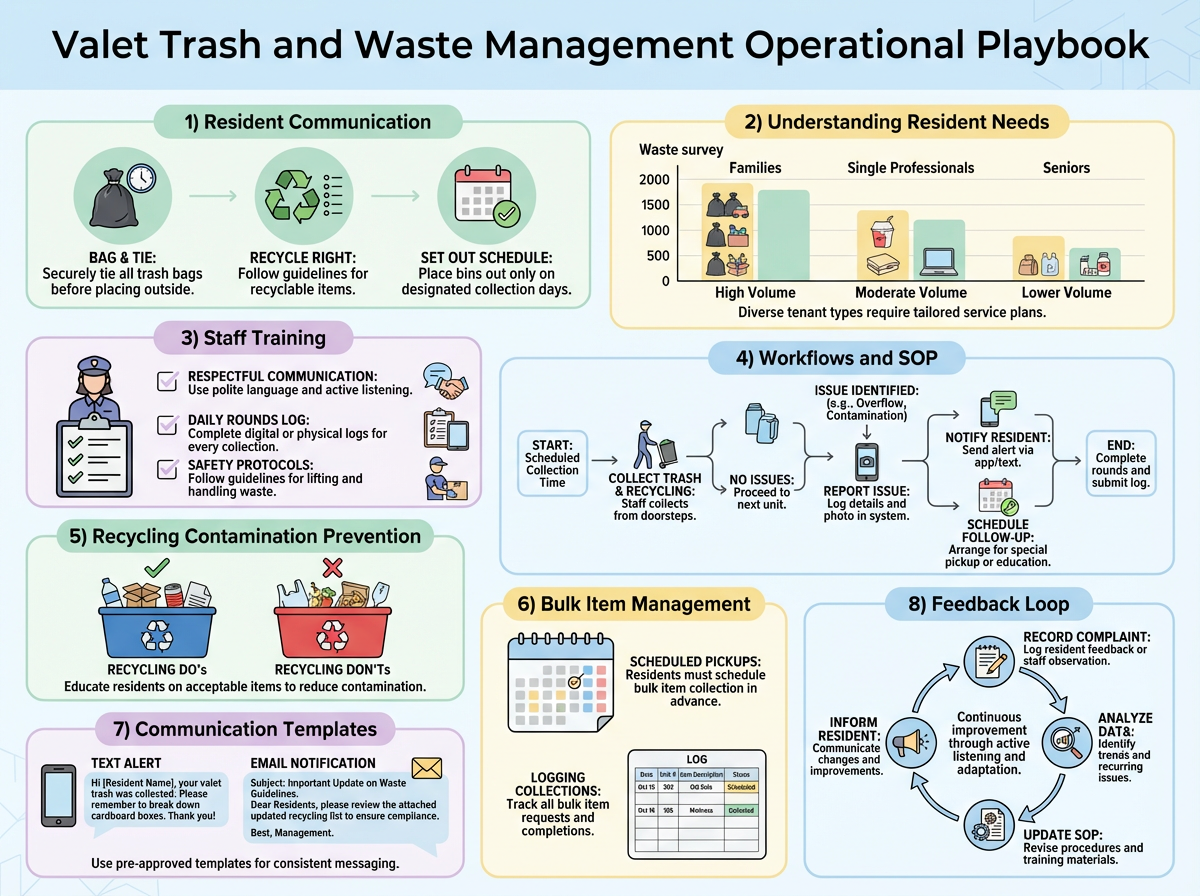
People don’t care about fancy terms; they want simple, clear instructions. Start with tenant education. Draft a straightforward welcome letter explaining when and how to put out trash, including cutoffs for bulk items and recycling rules. Reinforce this info regularly—monthly newsletters, community boards, even quick texts. Be explicit about no exceptions on pickup times. Residents don’t get that, and you’ll hear about it when trash piles up. Provide visuals: pictures of acceptable bags, bulk disposal steps, recycling dos and don’ts. Expecting everyone to read a wall of text? Dream on.
Second, understand resident needs.
Your waste management plan isn’t one-size-fits-all. Some communities have young pros who’re precise and eco-conscious; others have families with bulkier waste. Survey your tenants or just listen to the pattern of complaints. Is overflow from trash bins a recurring nightmare? Is bulk item pickup a mess? Adapt your policy accordingly. Maybe you need additional bins, scheduled pickups for bulk, or clearer separation protocols to cut recycling contamination.
Third, staff training is non-negotiable.
Your valet trash crew isn’t just moving bags; they’re frontline brand ambassadors. Train them on respectful, consistent communication with residents. They should know the pickup schedule inside out—no excuses for missed stops. Provide a checklist for daily rounds: confirm bin empties, report any overflows, log bulk item pickups, and note recycling issues. Teach them how to handle sticky situations—like a tenant refusing to separate recyclables or leaving trash late. Role-play these moments during training; it sticks better than lectures.
Now, about workflows—this is what keeps your operation efficient and complaint-free.
Create an SOP (Standard Operating Procedure) detailing step-by-step actions: from how to collect trash to handling overflow. For example, if bins are full before scheduled pickup, train staff to report immediately so you can deploy temporary solutions—like extra pickups or bins. Bulk items? Set a clear policy: residents must schedule pickup 48 hours in advance via the office. Staff confirms and logs this. Make it strict. No excuses. Overflow and missed pickups usually trace back to vague policies or missed logs.
Preventing recycling contamination is another beast.
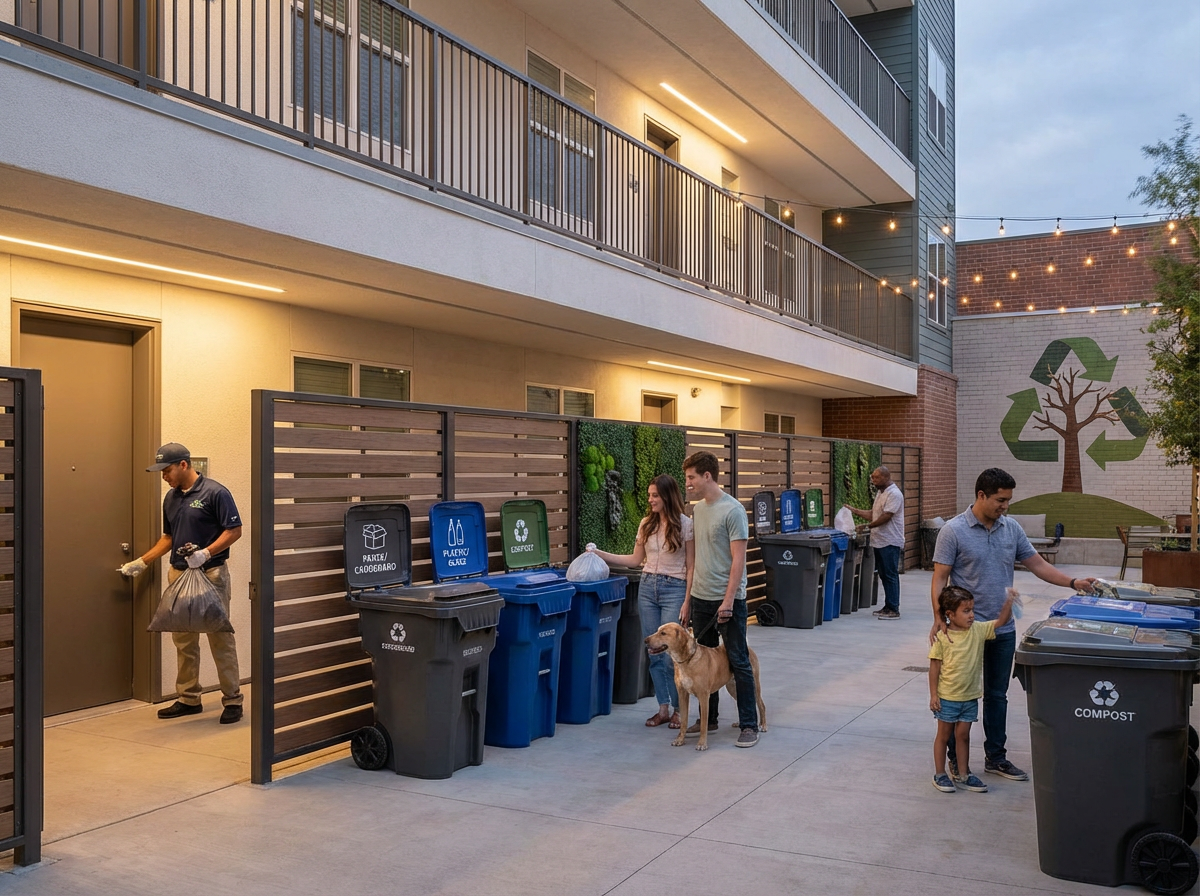
Your playbook must mandate clear labeling on all recycling bins and a simple guide for acceptable materials. Train staff to check bins quickly each round for contamination and sort out what’s reusable. If contamination rates spike, conduct resident reminders—this ain’t a guessing game; data backs it. Rotate staff to sweep common areas weekly for wayward items and keep overflow manageable.
Don’t ignore bulk items—these are often the biggest pain point.
Your playbook has to include a bulk pickup calendar, communication templates for scheduling, and clear disposal guidelines. Residents should know what qualifies as bulk and how to schedule pickups. The valet crew must log every bulk pickup with time stamps and condition reports. This cuts denials and messy posts on social media.
Communication templates are your secret weapon.
Build ready-to-go emails, texts, and notice posters to remind tenants about pickup days, recycling rules, and bulk item procedures. Keep the tone firm but friendly—nobody likes to be ordered around but everyone respects clear expectations. For example: “Reminder: Please place your trash in tied bags outside your door by 7 PM on pickup night. Bulk item pickups require scheduling 48 hours in advance. Let us keep the community clean together.”
Finally, build a feedback loop.
Ask staff to note resident complaints or observations daily and share them weekly with management. Use this data to tweak SOPs continuously. Ignore this, and you’re just juggling trash instead of owning the problem.
Here’s a quick sample checklist for your valet trash team:
confirm trash placed at curb by cutoff time, empty bins fully, inspect recycling for contamination, note overflow and report, log bulk item pickups with resident confirmation, provide courteous reminders to residents when needed, sweep common areas weekly for stray trash.
Training plans?
Start with an initial onboarding covering all above points, followed by monthly refreshers emphasizing problem areas like recycling contamination or bulk pickup protocols. Inject real-life stories or flash problem-solving drills for engagement. Testing knowledge doesn’t have to be boring; try short quizzes or rewards for staff who catch mistakes early.
Nothing here requires rocket science.
Property managers who master this operational playbook reduce calls and complaints at the office by half or more. They build trust with residents and create a smoother, cleaner community.
If your valet trash and waste management program feels like a dumpster fire, stop guessing.
Request a free quote today to get a customized operational plan tailored for your community’s specific challenges. Real data, real workflow fixes, zero guesswork.
Don’t waste another minute on sloppy trash service. Nail this operational playbook and watch everything just work.
If you want to dive deeper, check out the best step-by-step training available specifically designed for multifamily property managers on building ironclad AI Agents from scratch. It’s practical, no-nonsense, and made for busy pros who want results faster — just like you.