





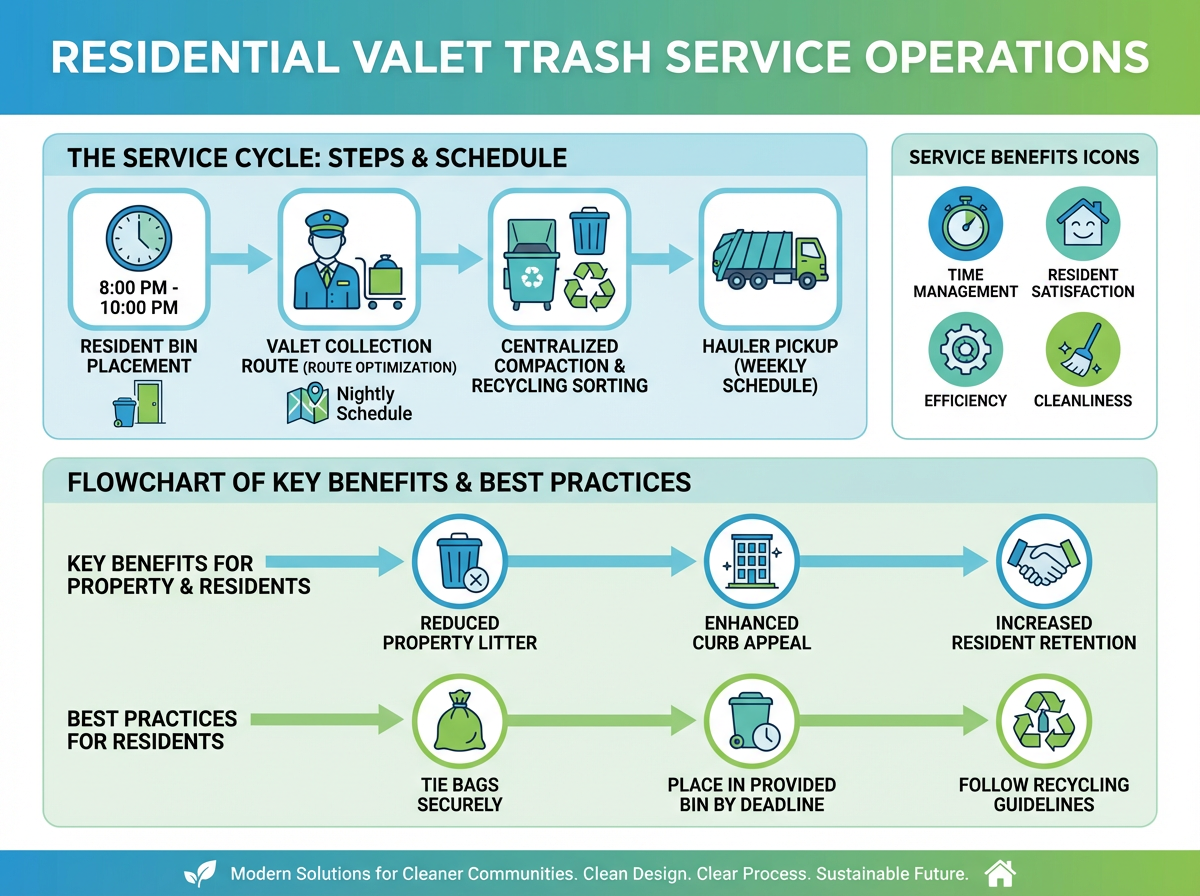
Valet trash service operations can make or break resident satisfaction and property efficiency. If you’re a property manager or multifamily operator, here’s the no-fluff guide to get this running like clockwork.
Start with tenant education.
Don’t assume residents know the rules. Create concise onboarding scripts that cover when and where to place trash, bulk item policies, and recycling do’s and don’ts. Keep it simple—no jargon. Use flyers, emails, and brief sessions during move-ins. Pro tip: reinforce key points before each pickup day with quick text reminders. People forget. Easily.
Proactive communication is your lifeline.
Establish a communication calendar that hits all the important touchpoints: move-in, monthly reminders, bulk pickup days, and seasonal recycling cleanups. Use multiple channels—email, SMS, even an app if possible. Always include clear instructions and a hotline or contact for issues. If you hear silence, you’re already losing control.
Build and train an on-site apartment services team focused on trash operations.
Hands down, this is your biggest leverage point. Their responsibilities? Checking trash areas regularly, ensuring cans are empty and clean, and spotting contamination in recycling. Train them with SOP checklists tailored to your property size and layout. Run drills on escalation workflows: what to do if a pickup is missed, or if trash overflows. Clear chain of command matters. Nobody likes guessing who’s responsible at 7 AM.
Speaking of SOP checklists, have one for daily, weekly, and monthly tasks.
Daily: inspect valet trash stations, clear blockages, note problematic units. Weekly: coordinate bulk item pickups, verify recycling bins aren’t contaminated, schedule deep cleans of trash rooms. Monthly: analyze KPIs like pickup adherence rate, contamination incidents, resident complaints, and overflow events. Numbers tell you what’s broken, fast.
On tenant communication, keep scripts punchy and action-oriented.
For example: “Reminder: Place bags outside your door before 7 PM on pick-up day. Bulk items? Schedule pickup by contacting XYZ. Let’s keep our community clean—recycle right!” No need to be a comedian, but do be clear. Ambiguity kills compliance.
Escalation workflows are often overlooked but critical.
For instance, if missed pickups happen twice in a week, the service provider gets notified immediately, and the on-site team follows up with residents to check if requirements were met. Escalate further if contamination spikes for three consecutive weeks: involve the property manager, consider resident fines or enhanced education programs.
KPIs to track:
pickup timeliness, resident satisfaction scores, contamination rates, number of overflow incidents, bulk pickup compliance, and overall cleanliness ratings. Use these to tweak training programs and adjust communication calendars. Data beats gut feelings every time.
Don’t forget visuals in common areas.
Simple signage near trash stations reminding residents on acceptable items reduces confusion and contamination. Also, invest in durable, well-designed valet trash bins and liners. It makes spill cleanup easier and looks nicer—residents notice.
Missed pickups? Overflow?
These are usually communication breakdowns or lazy enforcement. Fix that with clear protocols and reinforce tenant accountability—friendly but firm. Bulk items should never clog trash rooms because residents didn’t know how to schedule pickups, right?
Recycle contamination kills sustainability credits and raises costs.
Make it impossible to screw up by handing out quick guides during move-ins, posting graphic signs, and proactive bin monitoring by your team. Sometimes all it takes is a little nudge.
Want a solid operational boost?
Connect with a professional on-site trash solution provider for a free quote. They’ll tailor valet trash service operations around your property’s unique needs, handle tricky logistics, and train your team. Your residents will notice the difference. Efficiency and resident happiness? Check and check.