





Apartment waste management training and communication is not rocket science, but it’s often treated like that. For property managers and multi-family operators, this means cutting the crap and getting street-smart with tenants and staff. Here’s the rundown you actually need.
First: understand your residents.
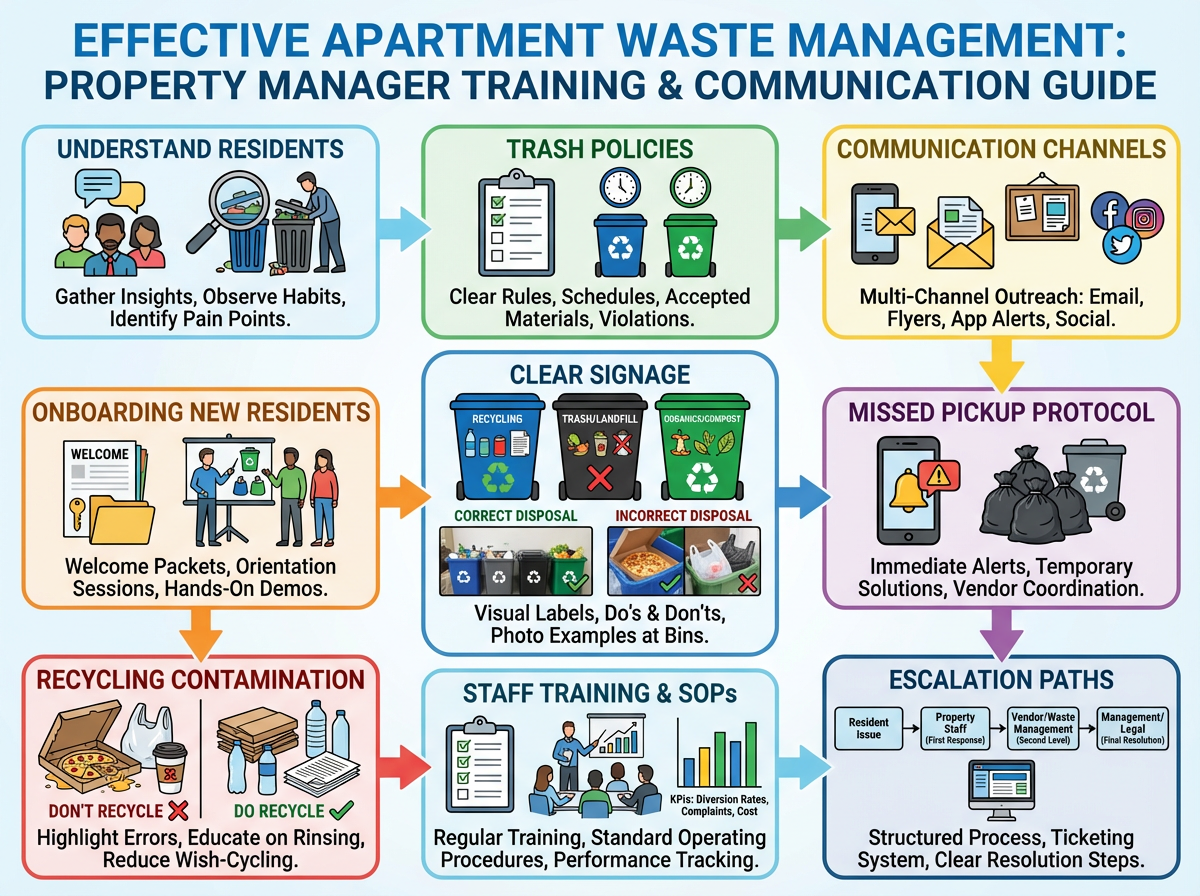
People don’t follow rules they don’t get or can’t stick to. Spend a week observing peak trash times, types of waste, and common slip-ups. Ask tenants what confuses them or annoys them about trash disposal. You’ll find most problems come down to unclear expectations or inconvenient setups.
Next: nail down trash policies that aren’t just official-sounding but actually followable.
Don’t just say “no dumping after 9 PM” if your staff picks up at 10 PM. Sync policies with your operations. Keep rules short, simple, and logical—for example: “Trash bags closed? Check. No bulky items in regular bins? Check.” Test these with a small group before rolling out.
Communication channels must cover all bases.
Use push notifications, emails, physical flyers in mailrooms, and yes, social media if your community is on it. Be consistent but don’t overdo it—twice a month is solid, plus reminders on trash days. Dump confusing jargon; say “Put your trash bags in these bins by 7 AM on Wednesdays” instead of “Comply with disposal protocols.” Regular updates reduce the “I didn’t know” excuse.
Onboard new residents like they actually care about trash.
Include waste management guides in welcome packets. Host short, live or virtual demos on trash rules. Mention penalties but focus on benefits—less smell, cleaner halls, fewer pests. Arrange a ‘trash buddy’ system for neighbors to remind each other during the first month. This builds a culture, not just compliance.
Signs matter.
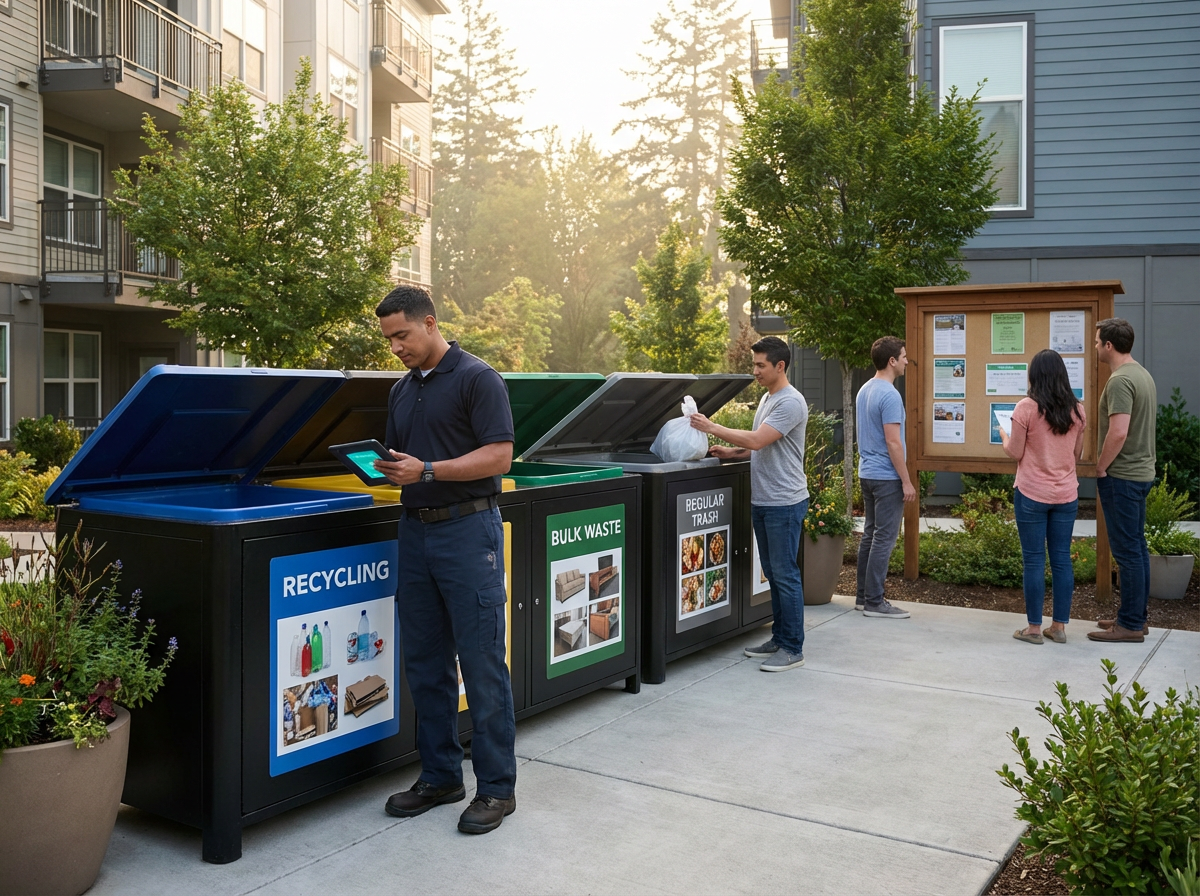
You want clear, bold, visual instructions right where trash happens. Use photos showing correct and wrong disposal methods. Label bins by type—‘Recyclables Only,’ ‘Bulk Items Here,’ ‘Do Not Overfill.’ Rotate signs seasonally or when you spot common mistakes. Replacement should be fast—no faded messes.
Missed pickups and overflow?
Don’t pretend they don’t piss people off. Have a “missed pickup” protocol: notify residents via text within 2 hours. Offer a same-day or next-day resolution window. Stock extra bags and portable bins for overflow emergencies. Teach residents bulk item drop-off schedules or partner with third-party services for pickup. Bulk items left to rot fuel complaints and rodents.
Recycling contamination is a nightmare.
Track what’s getting trashed wrong using staff feedback and resident reports. Run quarterly campaigns spotlighting common mistakes (“No pizza boxes in recycling!”). Include quick infographics in emails. Incorporate a simple “Recycle Right” checklist with do’s and don’ts. Incentivize correct recycling behavior with small perks or recognition.
Staff training is where half of these improvements die or thrive.
Develop SOPs that cover setup, pickup, overflow, spill cleanup, and resident interaction. Train your valet trash team regularly on these SOPs and soft skills like patience and clarity. Use checklists your staff signs off on every day—no loose ends allowed. Evaluate performance weekly with key KPIs: pickup punctuality, complaint rates, contamination reduction, response speed.
Here’s a quick staff checklist example:
– Check bins for contamination before pickup
– Report and document overflow or bulk waste issues
– Communicate missed pickups to management within 30 min
– Maintain trash collection area cleanliness
– Confirm resident complaints resolved within 24 hours
Escalation paths must be crystal clear.
If a valet trash member can’t resolve an issue in 1 hour, loop in supervisors. For resident complaints, set a max 24-hour resolution promise. Use a ticketing or CRM system to track these. Transparency builds trust, trust cuts complaints.
Consistent valet trash operations aren’t just fluff—they slash smell problems, litter, and noise complaints by at least 30% if done right.
Plus, happy residents stick around longer, lowering turnover and maintenance costs. Seriously, investing in proper training and communication isn’t optional anymore; it’s basic property management hygiene.
Want an actual turnkey approach?
Request a free quote for professional on-site trash services. They come with tested training programs, operational checklists, and resident communication templates you can steal but probably won’t need to tweak much.
Still feel like you’re battling trash dragons?
Give a pro a shout. They’ve been through this mess way more times than you, and trust me, that shortcut saves weekends.
If you want to dive deeper into building a reliable, resident-friendly waste system—check out the best step-by-step training programs on creating AI-powered agents that handle operations and communication for you.
It’s a game changer for property managers who want smart, fast wins without the usual headaches.