




Valet trash service management isn’t rocket science—but it can feel that way without a clear operational playbook. In modern multifamily communities, consistent trash collection, clean waste areas, and clear resident expectations directly impact renewals, online reviews, and day-to-day workload for on-site teams.
This guide breaks down how to (1) understand resident needs, (2) educate and communicate policies effectively, (3) build and train a reliable apartment services team, and (4) improve workflows step-by-step to reduce missed pickups, overflow, illegal dumping, and recycling contamination.
1) Start with resident expectations (and the friction points)
Residents typically want three things from trash service:
- Reliability: pickups happen when promised
- Convenience: clear, simple rules that fit real life
- Cleanliness: hallways, breezeways, chutes, and compactor areas stay sanitary
The biggest friction points in apartment trash operations usually come from:
- Unclear set-out times (bags placed too early or too late)
- Improper bagging (leaks, overfilled bags, no tied bags)
- Bulk items left at dumpsters (furniture, mattresses, TV boxes)
- Recycling contamination (bagged recyclables, food/liquid residue)
- Overflow at compactors or enclosures (capacity mismatched to volume)
Practical move: Run a quick monthly pulse check.
- Ask the leasing team what residents complain about most.
- Ask maintenance what they find in/around trash areas.
- Ask the trash/valet team where routes break down.
When those three perspectives align, you’ve found the real operational bottleneck.
2) Make tenant education simple, visual, and repeatable
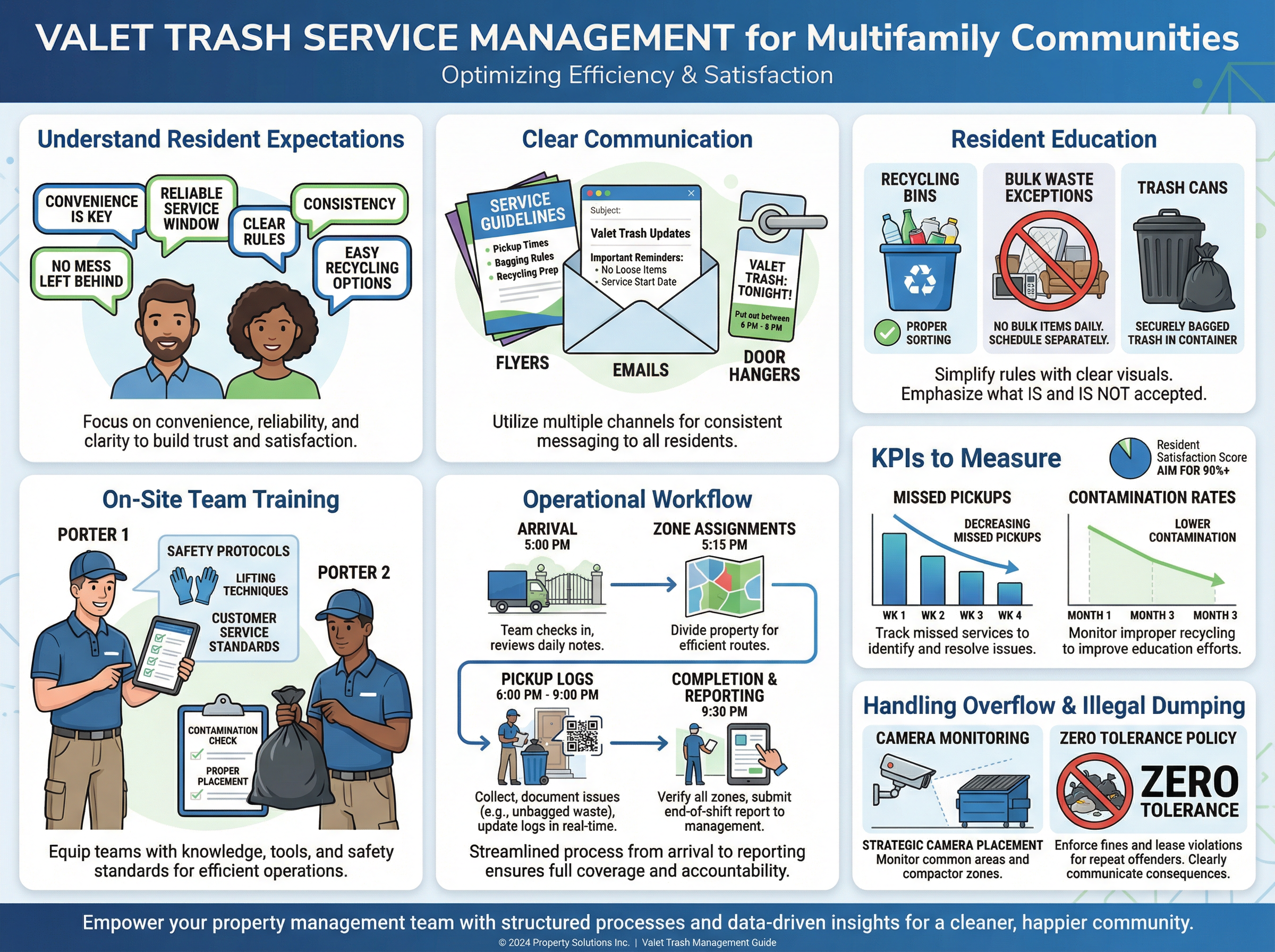
Resident education is most effective when it’s:
- Short (one screen, one flyer, one sign)
- Visual (photos of “yes” and “no”)
- Repeated (move-in, renewal, seasonal peaks)
What to teach residents (the essentials)
Focus on the rules that prevent 80% of problems:
- Set-out window (example: “after 6 PM, before 8 PM”)
- Bag requirements (tied, no leaks, weight limit if applicable)
- What is NOT accepted (bulk items, construction debris, hazardous waste)
- Where bulk items go (how to schedule or where to place)
- Recycling basics (no plastic bags, empty/rinse containers, flatten boxes)
Sample resident message you can reuse
Email/SMS template:
> Reminder: Valet trash pickup is Sunday–Thursday. Please place tied bags outside your door between 6–8 PM.
> No bulk items (furniture, mattresses, large boxes) and no hazardous materials. Need a bulk pickup? Contact the office for the approved process.
Signage that actually works
Put signage where decisions happen:
- Dumpster/compactor enclosure gates
- Trash room doors
- Recycling lids
- Mailroom or package lockers (high foot traffic)
Use photos of acceptable vs unacceptable items. Don’t rely on paragraph text.
3) Build an efficient, reliable apartment services team
Whether you manage valet trash internally or partner with a provider, performance depends on clear standards and accountability.
Hiring and role clarity
Define the role in operational terms:
- Route execution (time window + completion expectation)
- Safety practices (PPE, lifting, sharps protocol)
- Resident interaction standards (professional, non-confrontational)
- Documentation (missed pickup log, overflow photo, incident notes)
Train to the real world (not the ideal world)
The best training mirrors what staff will face on property:
- Overfilled bags and leaks
- Incorrect set-outs and “late bags”
- Bulk items staged improperly
- Access issues (gates, locked doors)
- Weather, lighting, and seasonal volume spikes
High-impact onboarding:
- Day 1–2: Shadow a top performer on a full route
- Day 3–5: Trainee runs route with supervisor spot-checks
- End of week: Skills validation checklist (below)
Skills validation checklist (quick audit)
- Can they follow route order and time window?
- Do they know what’s accepted and what’s not?
- Do they document exceptions with photos?
- Do they escalate correctly (overflow, bulk, hazards)?
- Do they leave hallways clean (no drips, no torn bags)?
4) SOPs that reduce missed pickups and resident complaints
Strong waste operations run on simple SOPs that answer: what happens when things go wrong?
SOP: Missed pickup
- Resident report received (office, app, or hotline)
- Confirm set-out time and unit eligibility
- Verify route log / photo if available
- Recovery window: return within a defined timeframe (example: 2–4 hours)
- Document and track as a KPI
SOP: Overflow at dumpster/compactor
- Photo + timestamp
- Notify property contact immediately
- Determine root cause:
- volume spike vs. missed haul vs. illegal dumping
- Trigger action:
- extra haul request, temporary overflow plan, or patrol/signage
- Follow-up inspection within 24 hours
SOP: Bulk item handling
- Define “bulk” clearly (mattress, furniture, large boxes)
- Provide residents a single approved method:
- scheduled bulk pickup days, or
- call office to request bulk removal, or
- designated staging area
- Enforce consistently (more on that below)
5) Improve workflows step-by-step (30-day operational plan)
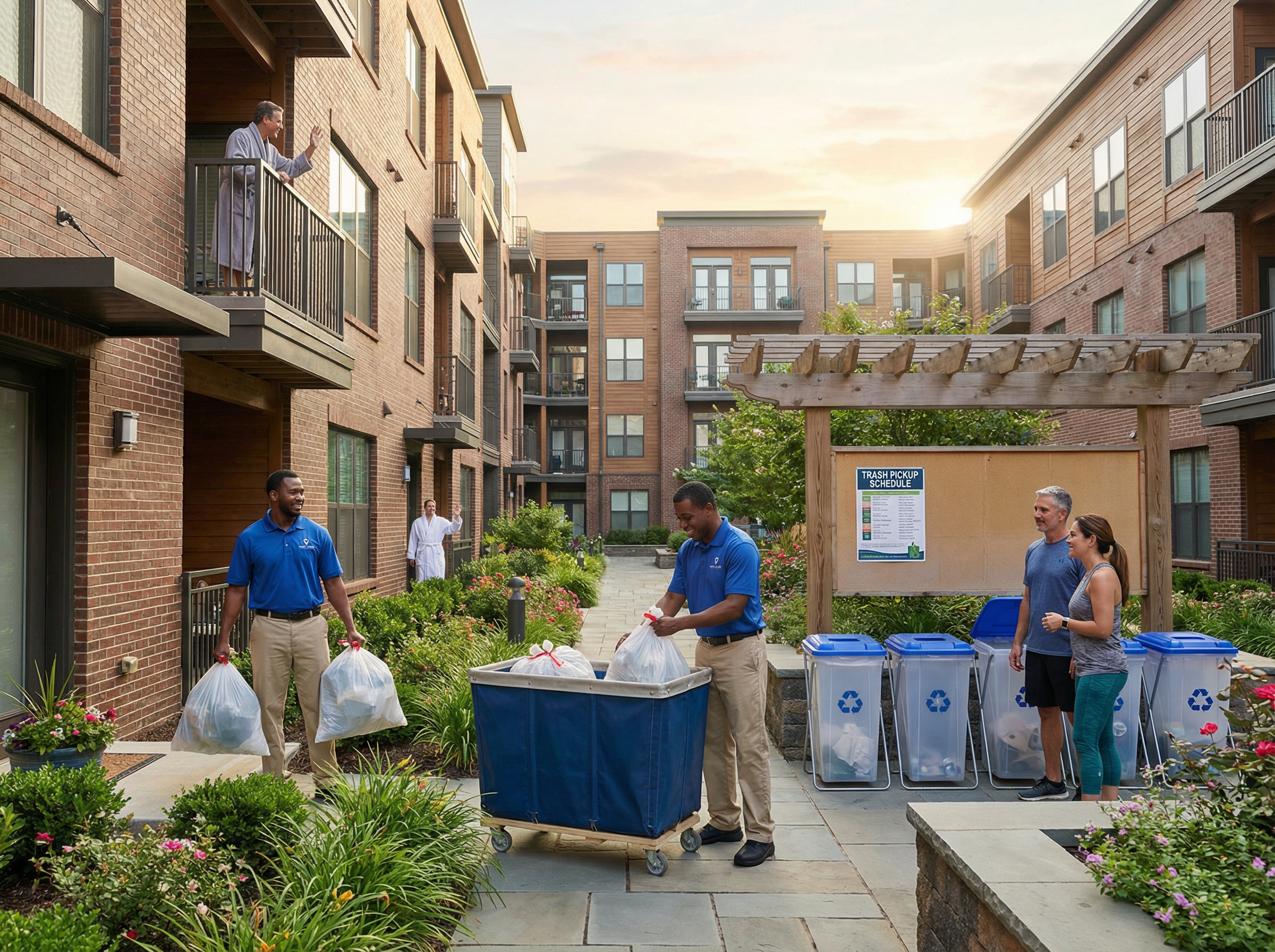
Here’s a simple way to improve resident experience and reduce waste-area issues without rewriting everything at once.
Week 1: Diagnose and baseline
- Track: missed pickups, overflow incidents, contamination issues, bulk dumps
- Map high-incident buildings and times
- Validate container capacity vs. actual volume
Week 2: Fix communication and set-out compliance
- Refresh resident reminders (email + signage)
- Add a move-in trash one-pager
- Standardize set-out window messaging everywhere (same time, same wording)
Week 3: Tighten execution and accountability
- Implement route logs (even a simple checklist)
- Require exception photos for:
- late set-outs, contamination, bulk, hazards
- Supervisor spot-checks 2–3 nights per week
Week 4: Prevent repeat issues and optimize
- Identify top 3 recurring problems
- Update SOPs and training based on actual patterns
- Adjust pickup frequency or hauling schedule if capacity is consistently exceeded
6) KPIs to track (so you can manage, not guess)
Choose a small set of metrics you can actually maintain:
- Missed pickup rate (missed pickups / total pickups)
- Resident complaint volume (trash-related tickets per week)
- Overflow incidents (by location)
- Recycling contamination rate (spot-checks or hauler feedback)
- Bulk item incidents (unscheduled bulk dumps)
Set targets, review weekly for 30 days, then monthly.
7) Enforcement that feels fair (and actually changes behavior)
Residents respond best when enforcement is predictable and consistent.
- Make the rules easy to find (welcome packet + resident portal)
- Give one warning for first-time issues when reasonable
- Document repeat violations with photos
- Apply fines or lease enforcement consistently (not selectively)
The goal isn’t punishment—it’s clean, safe, compliant common areas.
When it’s time to bring in a professional valet trash partner
If your team is overwhelmed by missed pickups, overflow, bulk dumps, or recurring complaints, a dedicated provider can stabilize service quickly. American Trash Service focuses on dependable on-site trash solutions built for multifamily operations—valet trash, scheduled pickup, bulk item coordination, and maintaining clean, compliant trash areas.
If you want a cleaner community, fewer resident complaints, and a trash workflow you don’t have to babysit, request a free quote here: